Blogs
OTA Parity: Why Your Rates Don't Match Across Channels
By Admin · July 28, 2026 · 5 min read
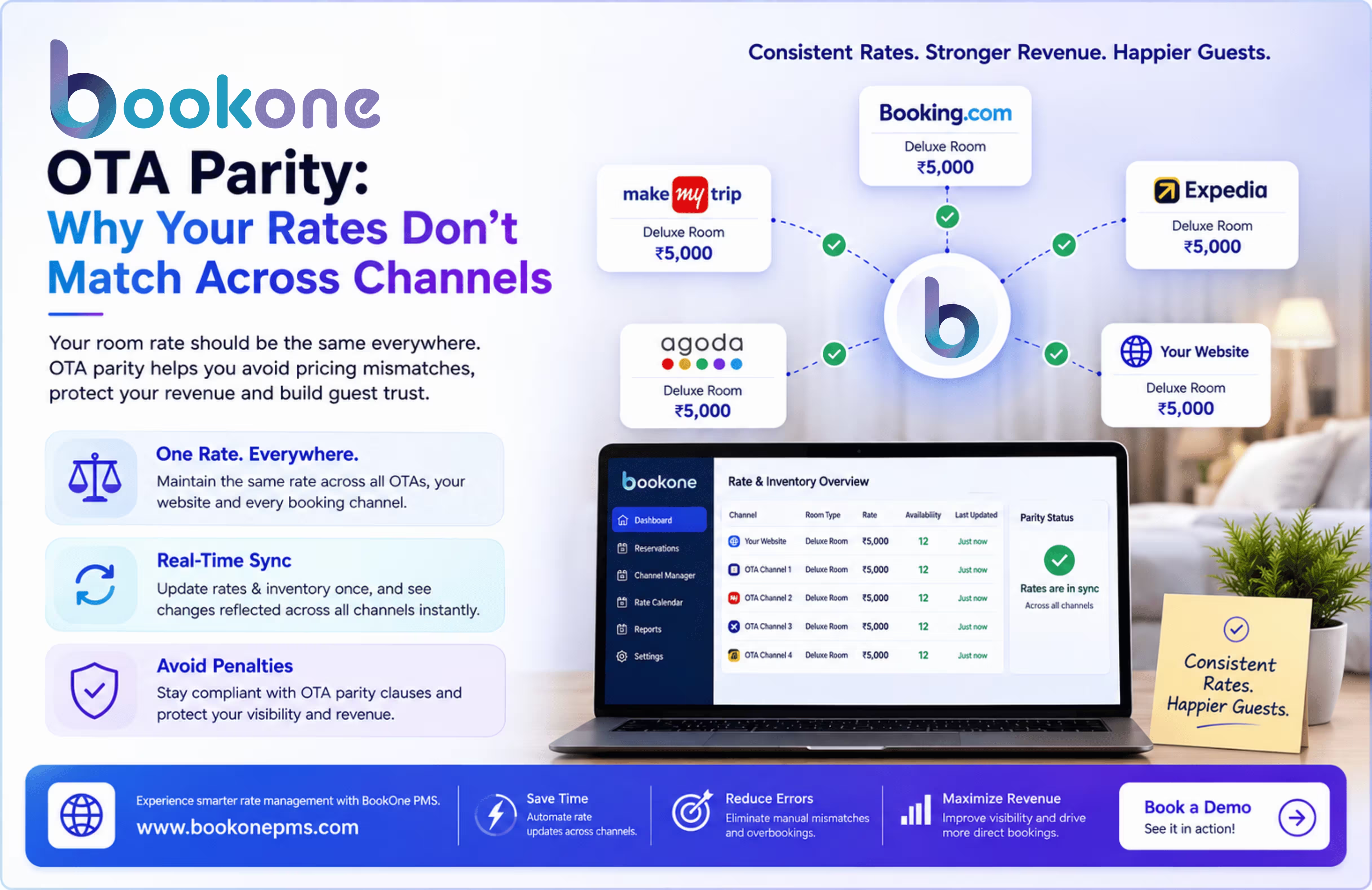
Every hotelier knows the feeling: you set your room rates, only to discover a guest booked the exact same room on an OTA for 15% less—or worse, that your own website is charging more than Booking.com. This isn’t just an embarrassing conversation at check-in; it’s a rate parity breakdown that quietly drains your direct profit margin and hurts your search rankings. Rate parity issues rarely happen on purpose—they build up in the cracks between disconnected systems, manual updates, and forgotten promotions. Here is why your rates drift out of sync across channels, what it actually costs your business, and how to fix it for good.
You set one rate for a room. A week later, a guest mentions they found it fifteen percent cheaper on a different site. Or the opposite happens: your own website shows a higher price than Booking.com, and you find out only when a guest asks why they should book direct at all. This is a rate parity problem, and it is one of the most common (and most avoidable) issues independent hotels run into once they start selling across more than one channel.
What Rate Parity Actually Means
Rate parity is the idea that a room should cost the same, for the same dates and the same conditions, no matter where a guest books it, your website, an OTA, a wholesaler, or a travel agent. Most OTA contracts include a parity clause requiring this, and OTAs actively monitor it. When parity breaks, it usually shows up in one of three ways: your rates on one OTA are lower than another, your direct website rate is higher than an OTA rate, or your rate on one channel simply hasn't updated after a change made somewhere else.
None of these are usually intentional. They almost always come down to how the rate was updated and where.
Why Rates Drift Out of Parity
Manual updates across multiple extranets. If you're logging into three or four OTA extranets separately to update a rate, the odds of forgetting one, or updating it a day late, go up every time you make a change. A rate change made on a Friday afternoon across four systems is exactly the kind of task that gets half-finished.
Promotions applied on one channel and forgotten on another. An OTA-specific discount or a flash sale is easy to switch on and easy to forget to switch off, especially when it was set up inside that OTA's own dashboard rather than centrally.
Different update timing. Some OTAs sync near-instantly; others take hours to reflect a change. If you update a rate at 9 a.m. and check parity at 9:05, you may see a mismatch that resolves itself by noon, which makes it hard to tell a real problem from a timing lag.
No single source of truth. When your website's booking engine, your front desk, and your OTA listings are not pulling from the same rate calendar, someone is always working from a slightly outdated number.
What Rate Parity Actually Costs You
Beyond the OTA contract risk, parity issues quietly work against your revenue management strategy in two specific ways. First, guests who compare prices across channels and find your direct rate higher have no reason to book direct, which pushes more of your business through commission-paying channels and erodes the margin on every booking. Second, an OTA that repeatedly finds you out of parity may reduce your visibility in its search ranking, which affects bookings well beyond the one mismatched rate.
Fixing Parity at the Source
The reliable fix isn't more vigilance, it's removing the manual step where drift happens. A channel manager connects your OTA listings to a single rate and inventory calendar, so a rate change made once updates everywhere at the same time, instead of being retyped into each extranet separately. This also solves the overbooking side of the same problem: when a room sells on one channel, availability updates across every other channel immediately, so you're not relying on someone refreshing multiple dashboards throughout the day.
Pairing this with your own booking engine closes the other common gap, the direct website rate quietly falling out of step with OTA rates. When your website pulls from the same rate calendar as your OTA connections, a direct guest always sees a rate that's at least matching, which is what actually earns you the margin of a direct booking rather than losing it to a small, forgettable pricing gap.
Since rate and inventory management sits closest to your day-to-day numbers, this is also where a PMS that ties reservations, rates, and channel sync together earns its keep. Parity stops being a manual daily check and becomes something the system maintains by design, freeing up the time you'd otherwise spend cross-checking four different dashboards.
A Simple Parity Health Check
Even with a channel manager in place, it helps to spot-check parity periodically, particularly during high-demand periods when promotions and last-minute rate changes are more common:
- Compare your website rate against your top two or three OTAs for the same dates and room type, monthly at minimum.
- Check that any promotion or discount applied on one channel has a clear end date and isn't still live weeks later.
- Confirm your cancellation policy, not just the headline rate, matches across channels; a cheaper rate with stricter terms is still a parity red flag to OTAs and guests alike.
- Review OTA extranet notifications for parity warnings rather than waiting for a guest to mention a price difference.
Rate parity issues rarely come from a single bad decision. They build up from small manual steps repeated across too many disconnected systems. If you'd like to see what rate and inventory management looks like when it's centralised rather than split across extranets and spreadsheets, you can book a demo with your own property's channel mix.