Blogs
Hotel Booking Engine Explained: The Secret to Direct Revenue
If your hotel website only has a 'Contact Us' form or a phone number, you aren't running a digital business — you're running a digital brochure. In 2026, the modern Indian traveler — from a Gen-Z backpacker in Ziro to a business traveler in Bengaluru — expects to see real-time availability and a 'Book Now' button.
This 'Book Now' button is powered by a Hotel Booking Engine. Let's explore how it works and why it is the single most important tool to fight high OTA commissions.
What Is a Hotel Booking Engine?
A Hotel Booking Engine is a software application on your website and social media pages that allows guests to check room availability, select dates, and securely pay for their stay in real-time. Think of it as your 24/7 Digital Receptionist that never sleeps and never makes a mistake.
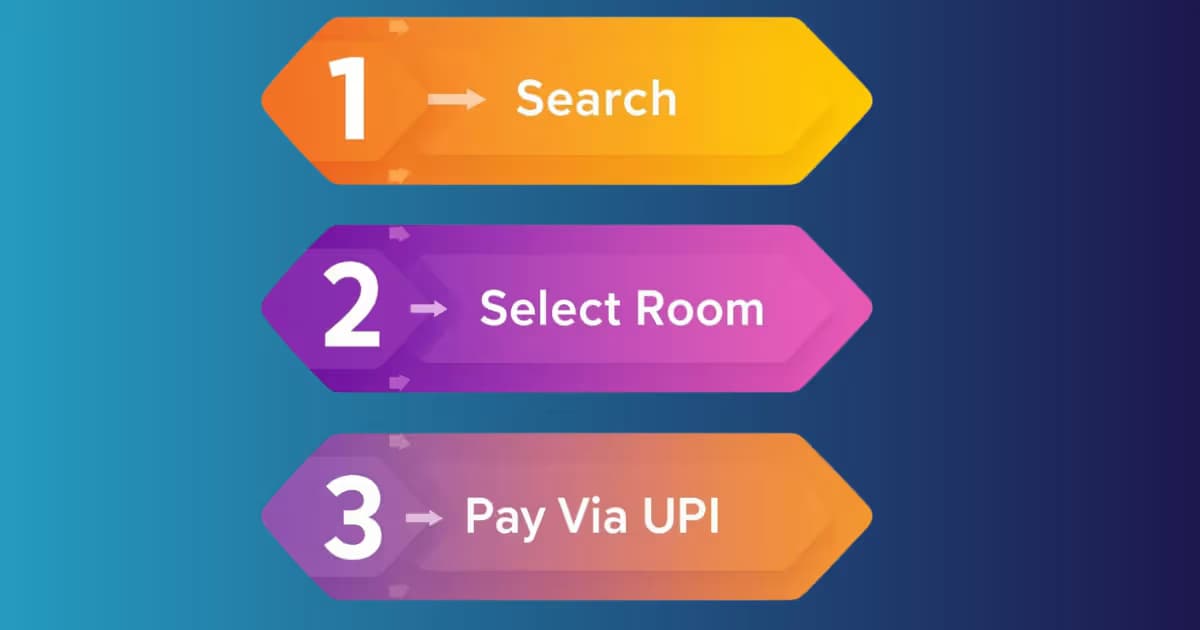
How It Works: The 3-Step Guest Journey
Step 1: Search & Select
The guest enters their check-in/out dates. The engine pings your PMS to show only 'Live' available rooms and the current ₹ (INR) rates in real-time.
Step 2: Guest Details & Add-ons
The guest enters their name and mobile number. Here, the engine can 'Upsell' services like Free Breakfast for an extra ₹300 or an Airport Pickup — increasing your revenue per booking.
Step 3: One-Click Payment
The guest pays via UPI (GPay/PhonePe), Credit Card, or Net Banking. Once payment is successful, the room is instantly blocked in your PMS, and a confirmation is sent via WhatsApp.
Why Indian Hotels Need a Booking Engine in 2026
1. Zero Commission, Higher Profits
When a guest books via MakeMyTrip for ₹4,000, you might pay ₹800 in commission. When they book through your own Booking Engine, you only pay a small payment gateway fee (approx. ₹60 – ₹100). That's an extra ₹700+ profit per booking.
2. The Power of UPI Integration
In India, UPI is the preferred payment method. Most travelers prefer scanning a QR code or tapping their PhonePe app over entering 16-digit credit card numbers. A modern booking engine makes this completely frictionless.
3. Capture Last-Minute Travelers
Many travelers book their stay while sitting in a cab or at the airport. They won't wait for you to answer a phone call. They want instant confirmation. If you don't have a booking engine, they will simply go to an OTA.
Direct vs. OTA: The Revenue Comparison (INR)
| Feature | OTA Booking (20%) | Direct Booking (BookOne) |
|---|---|---|
| Room Rate | ₹4,000 | ₹4,000 |
| Commission/Fee | (₹800) | (₹120) |
| Guest Contact | Hidden | Shared Instantly |
| Payment Cycle | 7–15 Days | Instant (Same Day/T+1) |
| Net to Hotel | ₹3,200 | ₹3,880 |
Implementation Checklist for Your Website
Visibility: Is the 'Book Now' button visible on the home page without scrolling?
Speed: Does the booking engine load in under 2 seconds?
Mobile-Friendly: Is the calendar easy to click on a small smartphone screen?
Social Media: Can you link the booking engine to your Instagram Bio and Facebook 'Book Now' button?